Showing posts with label Inflammation. Show all posts

Thursday, December 17, 2015

The Itchies Are Coming!... Whoa - it's not even Winter yet!

Now is the time to be thinking about warding off the spring/summer "itchies" which seem to plague many horses beginning with spring shedding and progressively getting worse as summer's bugs and sweat become part of daily life with your horses.

"It's winter and cold out, it's not a problem now!" I can hear many of us thinking. But this is exactly the time to start thinking about the basic causes of the inflammation process that triggers many forms of "the itches" and to begin your intervention tactics.  A multi-pronged approach I first learned from Dr. Eleanor Kellon, VMD, well known  leader and innovator in equine nutrition, has worked well for clients horses in the Southwest and across the country.

The basis of "itch", a sensation that causes the desire or reflex to scratch, arises from inflammation of nerves. Once sensitized, it becomes easier and easier for the nerves to become "excited" and more and more difficult to quell the sensation.  The sensitivity may carry over from the original culprit (an insect bite or contact with a noxious plant or substance) so that almost anything becomes a "trigger" - something which will set off the need to scratch.  Along with this comes a whole catalog of false-positive "allergies", even to substances the horse has never been exposed to before. A "true" allergy requires previous exposure to an allergy causing substance and the development of antibodies to the allergen itself, while a "false" allergy is an inflammatory reaction to a trigger acting as an irritant to the immune system.

Why some horses respond or react more to inflammatory insults than others isn't really known - just as why some people are allergic to bee stings or have autoimmune diseases and others do not.  There may have been a reaction to midge bites or another "trigger" when their immune system was busy with something else and that began the process. What we need to accomplish is to support the immune system so it can effectively deal with future triggers.  At the same time we don't want to "stimulate" the immune system as it is already overstimulated.

The first step in a comprehensive plan to combat next season's itchies is mineral balancing your horse's diet.  Without the base diet in place to provide the body with the tools and building blocks to develop and maintain a strong immune system, all your subsequent interventions become an exercise in futility and a waste of your time and money.  Start with a calcium phosphorus ratio as close as 2:1 as you can bring it, add magnesium to bring it to a similar level to phosphorus, then identify and balance excessive levels of iron (pro-inflammatory) and manganese.

The next step in your comprehensive plan is to provide a source of Omega-3 fatty acids and vitamin E in your horse's diet year round.  When horses graze active gowing pasture they receive adequate Omega-3 but, as soon as hay is cut and cured this is lost almost immediately (along with vitamin E). Flaxseed (fresh ground or stabilized) at a rate of two to six ounces a day, flaxseed oil at one to four ounces per day, chia seed at two to six ounces per day or any of a number of commercial Omega-3 supplements can provide the powerful antioxidant support missing from hay.  Vitamin E is another antioxidant which is easy to include (at a rate of 2 IU per pound of body weight or 2,000 IU for an average horse).

By starting these steps now when your horses may least seem to need them you're ensuring they enter into the critical spring shedding season with good immune system reserves.

Spirulina
Thinking ahead to your horse's spring and summer response to their usual triggers - bug bites, sweat, etc. - be prepared to take action before these triggers can set off a full scale inflammatory response. If your horse always breaks out in hives at the first sign of a gnat or midge, begin giving Spirulina at a rate of 20 grams twice a day (or 40 grams once a day) about a month before the first bug is expected to appear.  Spirulina is a farmed source of a specific blue-green algae (not "any" blue-green algae will do). Despite some of the outrageous claims of Spirulina as a "super food", it does have some mast cell inhibition properties and suppression of histamine levels which can effectively slow down or even halt some inflammatory responses, (similar in effect to the human medication montelukast).

A "nutraceutical" which has an anti-inflammatory effect is chondroitin sulfate.  This is the "same" chondroitin popular as a joint supplement but given at a rate of 2.5 to 5 grams per 500 pounds body weight per day, or 5 to 10 grams per day for an average horse.

There are several other herbs and "natural" remedies which may be helpful but few will be effective once the inflammatory cascade has been set in motion.  If you wait until your horse is already reacting to sweat and bug bites with hives or scratching themselves raw, you'll most likely need veterinary intervention and medications incluiding steroids and anti-histamines to slow down and halt the process and you - and your horse - will be stuck with another year of the misery of the itchies.

Caution! Just because sometihing is "natural" does not mean it is safe!  Make sure your veterinarian is aware of any supplements, herbs and nutraceuticals you give your horse, especially if any medications or treatments are also needed.  Even "natural" topical medications and sprays can be triggers - for example, a "natural" fly spray triggered my asthma last summer and raised hives on one horse's rump.

Plan ahead - and think about next summer's worst being a good roll in the sand and a shake after a ride. (This would be a great time to take Dr. Kellon's NRC Plus and Nutrition as Therapy courses!)

Warm regards,

Patti
in very chilly Vail Az


Links:
I have included Wikipedia and commercial links here today because they provide some simple explanation.
https://en.wikipedia.org/wiki/Itch
https://en.wikipedia.org/wiki/Allergy
http://www.desertequinebalance.com/articles/allergic-skin-reactions
http://www.desertequinebalance.com/supplements/omega-3
http://www.desertequinebalance.com/supplements/vitamin-e
http://www.drkellon.com
http://www.drkellon.com/coursedescriptions/nutritionasatherapy.html
http://www.mybesthorse.com/productinformation/spirulina.html
http://horsetech.com/equine-supplements/basic-ingredients/spirulina
http://www.ncbi.nlm.nih.gov/pmc/articles/PMC1781653/pdf/12061428.pdf
http://www.lifeextension.com/protocols/immune-connective-joint/allergies/page-03
http://www.mybesthorse.com/productinformation/chondroitinsulfate.html

Sunday, December 15, 2013

Immune System Support: the Basics

There are a lot of products out there which claim to support the immune system - some are beneficial and some are just unsubstantiated hype - and most are expensive. So what should you do if you feel your horse needs some help to stave off winter stress or to make it less likely he'll catch what the horse down the road has?


Immune system support starts with some basics which should be included in every horse's diet.  Before considering any expensive "specialty" products, make sure your horse's diet includes:
  • Clean water at a drinkable temperature.  If you use automatic waterers, buckets or tanks should also be available.  Every winter I hear from someone who's horse went without water for a day or longer because the auto waters froze up.
  • Salt is often overlooked but is important to encourage adequate hydration.  A 1000 lb horse should receive an ounce of salt (about 4 teaspoons/day) year round.
    • Inadequate sodium (from salt) can lead to dehydration at a "cellular" level which can impede or obstruct normal cellular metabolism.
    • Plain white table salt is best.  "Designer" salts make attractive door stops but may contain high levels of undesirable minerals.
    • If your supplement contains less that the minimum requirement for iodine (most only contain 2 mg) use iodized salt which contains about 1.7 mg iodine per ounce.
  • Adequate quality forage, preferably mainly grass hay, with additional provided as needed for colder temperatures.  (See the Cold Weather Feeding Chart.)
  • If you feed mainly Bermuda hay and your horse doesn't seem to be looking/feeling his best, consider replacing some of the hay (up to half) with Timothy pellets.  The added cost can pay off in improved condition and good health. 

  • Avoid feeds with high levels of simple sugars and starch (which converts to glucose) as excessive glucose can support inflammation.  The processing of "senior" feeds does help greatly with improving digestibility but some contain excessive starch. Look for high fiber feeds as these will be more apt to promote good gut health.  Or give your senior horse a 50/50 combination of beet pulp and steamed or crimped oats plus hay and/or Timothy pellets, along with a quality supplement,  for a nutritious senior diet. 
  • Avoid feeds and supplements with "added" iron.  Excess iron can help fuel inflammation and many forages already supply excessive levels of iron.
  • Look for a supplement which provides at least the minimum daily requirement for copper, zinc, iodine and selenium. For a 1000 lb horse these are:
    • Copper 90-125 mg
    • Zinc 360 mg
    • Iodine 3.2 mg
    • Selenium 1 mg
  • Vitamin E and Omega-3 are important antioxidants which decline rapidly when hay is cut and cured.  
    • For best immune support, provide vitamin E at a rate of 1000 IU per 500 lbs of body weight (2,000 IU for a 1,000 lb horse). It doesn't matter if the vitamin E is synthetic or natural but it does need fat for absorption.  Using human gel caps which also contain oil is best, otherwise add a small amount of oil at feeding time.  For an inexpensive oil which also adds a small benefit from medium chained triglycerides, try Costco's Mediterranean Blend (canola, olive and grape seed oils).
    • The simplest and most cost effective source for Omega-3 is flax. Provide about 2 ounces/day of fresh ground flax seed (which can be pre-ground and stored in the refrigerator) or stabilized flax - HorseTech NutraFlax, Omega HorseShine or Triple Crown OmegaMAX.
  • Iodine and selenium are both important for adequate thyroid functioning.
    • If your supplement has inadequate iodine, use iodized salt or the original Source meal which has a guaranteed level of iodine. If using another kelp or seaweed product, check that the iodine level is guaranteed.
    • Most supplements include selenium at about 2 mg per serving (2 mg per day). If blood tests show low selenium levels, you may need to use a selenium yeast product such as Platinum Selenium Yeast at a higher than usual dosage to bring the level up.  I feel  using an oral selenium yeast algorithm is safer than selenium injectables. 
The above list is what should be included in any horse's diet to ensure a healthy immune system. But older horses or those who are stressed or already ill can benefit from some additional nutrients:
  • Vitamin A - around 15,000 IU/day.  Vitamin A losses in hay occur over time; if hay is over six months since cutting it should be supplemented.  Many supplements provide this or you can use human gel caps.
  • Vitamin D - horses are able to synthesize their own vitamin D and it is also stored in the liver, usually in quantities sufficient to carry most horses through the winter.  If supplementing, stay close to the minimum requirement (3,000 IU for a 1000 lb horse) as excessive D can be toxic. Again, if not provided in your supplement you can add human gel caps.
  • Glutamine - this is an amino acid which is being added more frequently to equine probiotics.  It has been shown to be protective for the mucous membrane lining of the intestines which may help support the intestinal flora production of some immune modulators. 
    • There has been more research lately showing the importance of the intestinal lining and intestinal flora in maintaining immunity.
    • Cost to provide glutamine is about $0.44 for 10 grams per day. See the links below.
  • B-vitamins - not likely deficient except in stressed horses or those with gut issues.  May be included in supplements or can try a human "multi-B" tablet.  
    • Adding yeast (Saccharomyces cerevisiae - Diamond V or Yea Sac) can help provide a substrate for intestinal flora, which synthesize the B vitamins, to thrive.
I'd certainly consider these basic and cost effective additions to my horse's diet before moving on to more exotic - and pricey - immune support therapies.

Warm regards,

Patti
in windy Vail AZ

Links:

Flax

                   and PureBulk http://purebulk.com/l-glutamine-powder.html#.Uq3-1ZH-nfM

Selenium Yeast

Vitamin E and Omega-3 Information and links to sources

Yeast
Purchase Diamond-V Saccharomyces cerevisiae locally at feed mills for best prices

Reasonably priced "general" supplements 
HorseTech High Point
http://www.horsetech.com/high-point-alfalfa.html (the "alfalfa" should be used with Bermuda)
http://www.horsetech.com/high-point-grass.html (use with cool season grasses, Timothy pellets)

Source Focus Hoof


Friday, May 18, 2012

Omega-3 Supplement Choices

Omega-3 fatty acids are needed by horses for anti-oxidant and anti-inflammatory protection.  Natural forage pastures have high omega-3 levels - with omega 3 to 6 ratios of  4:1 to 6:1 - while most other feeds given to horses are high in omega-6 fatty acids. Omega-3 actions have demonstrated a decreased inflammatory response while actions produced from omega-6 are the opposite; they increase the inflammatory response, increase allergic hyperactivity and increase exercise-induced bronchial constriction.  (Pagan, Kentucky Equine Research.)

While both Omega-3 and 6 are essential, maintaining ratios similar to that of natural forage is likely optimum (Kellon, Nutrition as Therapy) and horses on hay diets with little or no access to good pasture should be supplemented with an omega-3 source. Cured forage rapidly loses it omega-3, and many other popular supplements such as rice bran and black oil sunflower seeds (BOSS) are high in omega-6. For example, to "balance" the omega-6 in two ounces of rice bran you would need four to six ounces of flax or four to six Tablespoons of flax oil. It would take six or more ounces of flax to balance the omega-6 in one ounce of BOSS. Flax seed also quickly loses its omega-3 activity after grinding unless refrigerated immediately or milled using a special process to stabilize the fatty acids.

You can estimate the amount of omega-3 and 6 in several different additives using the Excel calculator at http://www.desertequinebalance.com/supplements/omega-3. A PDF version is also included for reference. You're not likely to achieve perfect "natural forage" omega-3 to 6 ratios but this can help you keep a more natural balance and avoid feeding excess omega-6 in additives.

There is also a newly updated chart of products supplying omega-3 fatty acids that you can use to compare daily cost.  The obvious front runners in cost were "generic" flax seed and flax oil. Next in line are three "stabilized" products:  HorseTech's NutraFlax, Omega Fields' Horseshine and Triple Crown's OmegaMAX.   Karron Oil, once a Horse Journal top pick, is currently unavailable in the US.  Platinum Performance weighs in with Equine Healthy Weight, flax oil which uses vitamins C and E as preservatives. Chia seed is fairly equivalent to flax seed in omega-3 content.  It remains pricey but this may be made up for by the convenience of being able to feed chia seeds whole without grinding.

I'm not a fan of giving any animal-based products to my horses so only one product containing fish oil is included.  It has not been conclusively shown that the form of omega-3 in fish oil is well utilized by horses (as it is in humans).

There has been no documented evidence that either flax seed or chia seed can prevent sand build up or clear sand from the horse's digestive tract.  Until this has been clearly demonstrated you should follow your veterinarian's suggestions for sand build up prevention.

I hope you find this information useful - it isn't always simple to balance cost vs need or convenience.

Flax flowers

Best regards,

Patti
Desert Hoofprints in 100+ degree Arizona where flax flowers grow under my bucket washing rack.


Saturday, March 03, 2012

Immune Boosters

A question was posted the other day on a local equine group discussion forum:
I am hearing a lot about immune boosters for both people and animals.   Does anyone out there have any experience with them?  Any suggestions for brands and where to get?
Thank You,
DiAnne
Responses included recommendations for APF  from http://www.auburnlabs.com/ and Total Immune Health - a Chinese herbal mixture from FLOTH http://www.forloveofthehorse.com/total_immune_health.php.
Hi DiAnne ~

APF (Advanced Protection Formula) is a concentrated tincture of three ginsengs, which are in the group of "adaptogenic" herbs.  These herbs tend to "normalize" body systems - an example might be calming a hyperactive horse and improving alertness in an exceptionally laid back horse. 

This article from the APF site http://www.auburnlabs.com/documents/Gastric%20Ulcers.pdf provides some interesting information but doesn't really explain why adaptogens work.

This Wikipedia article gives a little better idea. http://en.wikipedia.org/wiki/Adaptogen

Canadian ginseng powder will give similar results; good sources are 

If looking for immune support for a specific condition, you want to differentiate between an immune "stimulant" (something that boosts immune response, like adjuvants in vaccines do) and an immune "support" product (substances that allow the body to modulate the source/cause of inflammation).  You want to avoid immune "stimulants" if treating an autoimmune related inflammatory condition (for example Transfer Factor is an immune stimulant).  

Many immune "support" supplements act as anti-inflammatories through a variety of mechanisms - 

Spirulina acts on leukotriene receptors (similar to the human asthma medication Singulair) to reduce production of histamine

Duralactin (and other milk protein, whey protein or colostrum-based products) appears to block cytokines to inhibit neutrophil participation in the inflammatory response http://www.duralactin.com/products_equine.htm

Chondroitin has anti-inflammatory action not only on joints but on many other body systems at a cellular level (making it very useful for sterile urinary tract inflammation in cats along with skin "allergies" in horses). http://www.ncbi.nlm.nih.gov/pubmed/9743814

Anti-oxidants play a strong role in supporting the immune system in horses - vitamin E, Omega-3 from flax, selenium, grape seed extract (http://purebulk.com/grape-seed-extract-95), along with balanced minerals and vitamins.  

IMO, if you start out with quality feed and hay, (preferably mineral balanced), provide a good level of anti-oxidant support including flax and vitamin E for horses not on pasture, avoid excessive iron, and provide lots of exercise you generally won't need pricy "immune" products except for periods when your horse is exposed to extra stress. For travel, competition, new experiences, etc. I'd reach for the APF or ginseng.  For "allergic" (inflammatory) responses, I'd look to vitamin E, flax, Spirulina and chondroitin, and consider whey protein, colostrum or Duralactin as a next line of defense. I also feel it's important you have an idea of what results you expect from a nutrient (product, herb, etc.) before spending a lot on something.

A lot of people indicate they've had success with the FLOTH herbs - I feel they can be a bit pricey and not always useful if the basics haven't been covered first and I'm not well versed enough about TCM (traditional Chinese medicine) to comment on the specific herbs used in the formulas.  As with any herb, if they're potent enough to be effective, they're potent enough to have undesired side effects if used incorrectly.


Friday, December 03, 2010

From Horse Apples to Poo Soup

To most horse lovers, Parfum de Pommes Cheval is part of the stable lifestyle. But what happens when those fragrant horse apples turn into poo soup?

Diarrhea in our horse is an indication that all is not well in his digestive tract and can have serious consequences. It may quickly lead to dehydration which can be a primary cause of colic. It's important to determine the cause but, while we're figuring this out, there are some steps we should take to avoid more serious problems.
  • Monitor your horse's water intake. If you use an automatic waterer, turn it off and provide water in a large container (tub, tank or large, clean trash barrel). Make sure your horse will drink from this source.
  • Provide a second bucket of water that has some salt added - a small handful of plain salt in a 3-gallon bucket is about right.
  • Provide wet feed such as a beet pulp slurry or add water to his usual concentrate to make a wet mash. A benefit of beet pulp is it will also act as a "pre-biotic".
  • Feed hay wet - either spray with water or dunk in a bucket.
  • Watch that your horse is actually swallowing his water and mash - not just playing with it. Some illnesses can cause paralysis of the esophagus and prevent swallowing.
Call your vet immediately if:
  • Your horse can't swallow.
  • He has a temperature above 102F (or 1 degree above his "normal" temperature).
  • Your horse seems dehydrated. Do a skin pinch test on the shoulder or neck - the tented skin should immediately snap back with no "wrinkles". Check his gums - they should be a healthy pink; press on the gum until it's blanched (white) - it should become pink again in less than 3 seconds.
  • His resting heart rate is higher than normal (in the 30's or low 40's). You should have a record of his normal heart rate from doing "well horse checks" when your horse is healthy.
  • Your horse seems depressed - standing with his head in a corner, not responding like he normally does or ignoring his surroundings.
  • The diarrhea has a foul odor - not the normal fragrance of manure - or you can see blood or mucous.
  • He acts like his tummy hurts - looking at or biting his sides, pacing, anxious look on his face.
If your horse is otherwise bright and healthy appearing and is eating and drinking normally, it may be safe to wait and watch a day or so to see if the diarrhea resolves on its own - like the "nervous squirts" many horses will have when trailering or after being moved to a new place. But if your horse seems off, it doesn't hurt to at least give your veterinarian a heads up - you and your vet may decide that some extra fluids (by IV or tube) might be appropriate to avert an emergency in the middle of the night.

With an acute, or sudden onset of diarrhea, trying to slow down or stop it is not always the best route. Diarrhea is one of the ways the body has to rid itself of pathogens in the GI tract. Some pathogens create toxins that can damage the intestines - if the body is kept from eliminating them the pathogens can multiply and continue to create toxins. "C. diff" (Clostridium difficile) is one example - this can cause painful cramps and serious damage to the intestines and requires antibiotics to resolve - your vet is likely to order stool cultures to determine the best treatment.

Recurring or chronic diarrhea may be caused by bacteria but may also have its root in poor gut function - poor fermentation of the fiber in his forage from a variety of causes, inflammation, poor immune function and fungal infection. If pathogens have been ruled out, there are several things you can look at -
  • Evaluate your horse's diet for adequate forage (1.5 to 2% or more of body weight) and concentrates that may provide excess sugar or starch.
  • Provide smaller, more frequent concentrate meals to lower the chance of undigested sugars getting past the cecum and small intestine to the hind gut.
  • Examine your hay and feed for mold, insects or rodent droppings. If hay is of questionable quality, it can be tested for mycotoxins - see Equi-Analytical's web site.
  • Add a pre-biotic or pro-biotic - such as Ration Plus, S. cerevisiae yeast, Forco or other quality product to your horse's ration. Pro-biotics in a feed or supplement may not be included in sufficient quantity to be effective in establishing adequate gut microbes. Beet pulp also acts as a "pre-biotic" - helping set up favorable conditions in the gut to encourage the "good" bugs to grow.
  • Many people have reported success using human "over the counter" remedies to sooth and protect the GI tract. These include aloe vera juice, simethicone or antacids containing simethicone and kaolin/pectin (also available as a large animal preparation at some feed stores). As a rule of thumb, an equine dose is about four to six times the human dose - think "weight based" and consult your vet.
  • There are also many products now targeted to the equine GI tract. Dr. Eleanor Kellon's Horse Journal Guide to Equine Supplements and Nutraceuticals has a complete section on Digestive Tract Aids.
  • Ensure your horse is receiving adequate salt in his ration. Inadequate salt may lead to chronic dehydration at the cellular level which can affect all bodily functions. Horses are unable to get enough salt from a salt or mineral block. One to two ounces (approximately one to two heaping Tablespoons) of regular table salt is about right for an "average" size horse at maintenance.
  • Evaluate your horse's deworming program, especially if his exposure risk has changed. "Natural" dewormers have not been shown to be effective and horses with lowered immune system defenses (including from age) are more susceptible to problems from parasites.
Don't give commercial electrolytes to a dehydrated horse - this can worsen any problems he may be having. A second bucket of water containing some salt can be offered and may encourage drinking but only if plain water is also available. Your veterinarian may want to give electrolytes in IV fluid but she will also ensure that adequate plain fluid (normal saline IV or plain water via stomach tube) is also given.

Most diarrhea in horses will resolve fairly quickly, but keep a sharp watch for dehydration or other signs that you need to call your vet.

Tuesday, November 30, 2010

"Allergies" - breaking the inflammatory cycle with a proprietary blend...

I don't often reply/post on many of the on-line groups I'm subscribed to as I'm not often able to get back to follow-up. But recent discussions on "allergies" and herbal remedies (for "allergy" and other inflammatory conditions) on the EC/IR group and other groups caught my attention.

The discussions on allergies made me think of my asthma - I really think many horses are not "allergic" but simply get caught up an inflammatory response - if the inflammatory cycle can be stopped, the "triggers" will cease to cause problems (or not as much). I didn't initially understand why I wasn't "allergic" to all the stuff that caused breathing problems, red eyes, runny nose and itching - my allergy tests were all negative. But, working with the allergist, I learned that "triggers" are not the same thing as allergies and I found these triggers (ranging from perfume to dust to cold to kitties to pollens, etc.) don't affect me as much if I take care of the baseline anti-inflammation stuff - like taking my
magnesium and Singulair (which is very similar to Spirulina in the way it acts), staying hydrated, getting enough rest, eating a balanced diet. If I do all these things I can stay off the inhaled steroids. In fact when I really pay attention to what I eat and drink and get enough rest I can actually pet and play with the barn kitties without turning into a mass of itchy red eyed sniffles.

Flax, spirulina, chondroitin etc (in addition to the baseline mineral balanced diet) all help improve the inflammatory threshold so the horse doesn't respond to triggers by mounting a major inflammatory response. But once an inflammatory cascade is started it seems more and more things will act as triggers until our horse is in a bubble of inflammation - with many systems affected. It can take something fairly significant (such as steroids and antihistamines) in large enough doses taken for a long enough period of time to stop the inflammatory response spiral and hold it off long enough for the immune system to regroup.

I think this is why some of these herbal concoctions are successful - if you put a large enough variety of herbal ingredients with anti-inflammatory properties in a high enough potency to stop the inflammatory cascade plus some adaptogens to help improve circulation, etc., something's bound to work. The "proprietary blend" or, IMO, "kitchen sink" approach.

If someone uses one of these blends and it works, the cost and accompanying rhetoric is irrelevant and we become a fan. Few of us actually take the time to figure out what made it work. If it doesn't work, we tend to just walk away and start searching for something else - we rarely go somewhere to discuss the downside - that it may have gotten in the way of appropriate diagnosis and resulted in the wrong treatment for the wrong thing.

At times some people have seemed to feel that the main Equine Cushings list is "anti-herbal". It isn't but the group has always advocated:

  • Knowing and understanding what you're giving your horse; what it is and what is it meant to do.
  • Being responsible for what gets put in your horse's body.
  • Understanding that any herb or homeopathic that is potent enough to effect change is potent enough to possibly produce side effects or toxicity, the same as any other "medicine".
  • Understanding that "natural" does not equal "safe".
  • When you give "kitchen sink" mixtures, you have no idea what worked and what didn't.
  • If it looks like magic, there's probably some sleight of hand involved, especially if it costs a lot (this is my personal opinion).
  • Any medications - western, non-traditional, herbal, energy modalities, etc. need to be administered after a sound nutritional base is established; often the appropriate balanced nutrition provides a sound base and some conditions that previously required medication are eliminated.

It's necessary for the EC main list to remain tightly focused so in depth discussions that aren't directly related to EC/IR are referred to EC Horsekeeping - that doesn't mean they are "anti-xyz", just that it may be distracting for many newcomers.

There are a lot of herbal resources on-line and in bookstores - where you can look up an herb, see its properties and what it's expected to do and determine if this is something appropriate for your horse. You don't need a pharmacy or medical degree to decide if you want or need to give your horse something that will cause him to pee more or make his liver work harder or if a mild anti-inflammatory will make him more comfortable after work - many of these decisions are simply common sense; you may want some guidance to determine if you want to give your horse an immune stimulant or something that supports his immune system (a vast difference).

If you really want to get a handle on changing the course of the inflammatory cycle, check out Dr. Kellon's Nutrition as Therapy course.

Tuesday, November 17, 2009

Equine Pemphigus Foliaceus

Pemph.... what?

Pemphigus foliaceus (pem-fi-gus foli-a-shus) is an auto immune disease that affects humans and dogs and, to a lesser extent, cats and horses.
In horses, it is characterized by primary lesions that often begin on the head and lower extremities; secondary lesions spread to other areas, with an exudate that dries to a crust. There may be extensive edema (swelling) in the legs and abdomen (called "ventral" edema).
Equine pemphigus foliaceus (EPF) is considered rare and signs and symptoms may resemble those of other conditions such as insect bite allergies (crusty lesions), pigeon fever (ventral edema) or other skin conditions.
The primary way to diagnose EPF is by punch biopsy of the skin which is examined by a veterinary pathologist. The pathologist looks for changes consistent with this diagnosis, while also ruling out other causes.
Horses with EPF may also have systemic signs of illness - fever, depression, loss of appetite, lethargy and weight loss. The skin may be painful to touch and swelling can make it difficult to walk or lie down.

Currently, treatment options are limited, mainly focused on corticosteroids (dexamethasone, prednisolone and prednisone) to limit inflammation; prognosis is generally guarded at best with many cases ending in euthanasia. Little is known about specific causes of EPF and what supportive treatments might be useful.
The Equine Pemphigus Foliaceus (EPF) group is hoping to change this. Two horse owners who have been looking for information and answers have recently teamed up with Eleanor Kellon, VMD to look at triggers, what's working and what's not, and how these horses can be supported to continue leading productive, comfortable lives. Dr. Kellon has a long history of developing cutting edge science-based supportive therapies for horses, with an emphasis on precise diagnostics by field veterinarians. By identifying and bringing together owners of afflicted horses, reviewing and comparing their histories, diagnostics, treatment and outcomes, and utilizing available research, a comprehensive picture of how to optimize support will emerge.
If you have a horse who has been diagnosed with EPF - currently or in the past - share your history with others by joining the EPF group. The group will provide information and support for owners, and is focused on improving science-based diagnostics, treatment protocols and outcomes for the horse.

Saturday, April 26, 2008

Slick & Pretty or Pretty Slick?

There's a million ways to get your money in the horse world - most are not new but a slicked up version of something pretty basic.

"Ration analysis"  or "ration balancing" programs seem to fall in this category.

You can go to the NRC Nutrient Requirements of Horses Computer Model website and determine your horse's basic (minimum) requirements for free. No fancy graphs or bells and whistles - but the information is calculated for you in a clear, readable format. You enter your horses weight, class and activity level and the protein. When you click on "Other Nutrients", protein, DE and major mineral requirements are shown on the bottom of the page, with the trace mineral and vitamin requirements listed in the center of the page.
You can then enter "dietary supply" - either by selecting from the provided database (which is somewhat limited) or by entering information from a known hay/feed analysis. This will provide information for protein, DE and major minerals only.  

The downside is this does not provide any information concerning correct mineral ratios, how to correct for competing mineral excesses or deficiencies, or identify potentially troublesome excesses (such as high iron or high manganese). To do this, you need to enlist the help of an equine nutritionist, learn how to do the math yourself (it's not really that difficult) or learn how to use the spreadsheets available either in the Equine Cushings group files or you can request them from me at no charge.* 

Enter Slick & Pretty

FeedXL, a program that is initially only addressing feeding conditions in Oz, works much the same as the NRC computer model.  They are using an interesting subscription concept, rather than purchasing the program. This does have the advantage of allowing for ongoing updates to their forage and feed databases, along with keeping it more affordable for an average horse owner (for a "one day" one time calculation - monthly or yearly cost begins to approach program purchase costs).

They have done a nice job on this - the "results" are displayed in clear, easy to read numerical and graph formats, using correct nomenclature. 

If all we were concerned with was meeting or exceeding NRC requirements (and they're quite clear that the program's recommendations are higher than NRC), I would suggest that this online model is what we've been looking for. And this could be all many horses need.  But, in our experience with metabolically challenged horses, we've learned that balance is not simply meeting/exceeding requirements, but also involves paying attention to mineral ratios.

Green is Good?

The FeedXL tour example indicates iron at 506% of requirement "... is no cause for concern..." and has an iron to copper ratio of 12:1. This could be problematic for an insulin resistant horse or a horse with inflammatory issues, as excess iron is becoming well documented as a factor in IR and inflammation.  "Green" (i.e. no deficiency) is NOT good if an excess of a mineral is problematic.

It becomes fairly complicated to explain mineral ratio corrections - each correction affects other minerals which then also may need adjustment. In a computer model, this becomes a multi-step process, but not difficult for a sophisticated program to handle (my spreadsheets actually do it quite easily) but does require some interpretation to ensure recommendations remain within safe limits. 

I didn't see a provision for entering your own hay analysis results, and only Australian feeds are currently in the database.

So, as slick and pretty as this program is, I don't see any real advantage over what you can get from free from the NRC model, plus a little math.


*While I do charge for consultations and assistance, I have always made the spreadsheets available at no charge for individual use. I appreciate a "donation" if you find them useful, but it is not required.

Wednesday, March 28, 2007

Speedy Laminitis/Founder Recovery ?

Recently, I responded to a question on the EC list about one of the targeted "magic bullet" supplements that are becoming heavily marketed toward horses with laminitis. The supplement in question isn't a bad supplement - it is safe and would likely do the job - but in my mind it supplies some unnecessary nutrients, is overpriced and appeals to the emotional vulnerability of our desire to do the best we can for our horses.
The writer was appropriately seeking to support her horse's recovery from founder, but also wanted to know if the supplement would provide a "speedier" recovery.
There is no speedy recovery from laminitis/founder - under the best conditions, recovery is limited by the horse's ability to grow a new hoof capsule.
With all systems being optimal
  • diagnosis by doing the correct blood work for metabolic issues to differentiate IR (insulin resistance or metabolic syndrome) from Cushing's Disease (PPID)
  • appropriate medication only if definitively diagnosed with Cushing's
  • removing the source or cause of the laminitis/founder
  • diet based on low carbohydrate forage supplemented with minerals and vitamins that both provide recommended daily requirements and balance any excesses/deficiencies based on hay analysis or regional information
  • frequent hoof care based on a trim which places P3 ground parallel and removes stress from the injured laminae
  • non-weight bearing straight line exercise (no riding) as tolerated by the horse during recovery plus as much turn out as possible for free movement
recovery from laminitis/founder is going to take the time it takes to regrow a new hoof capsule with tight laminar connections - at least 8 to 10 months or more.
Even if your horse "appears" sound - if shod, with anti-inflammatory medication (bute or herbal), on soft resiliant footing or when wearing boots - it takes at least eight months for the hoof capsule to regrow and the damage to be repaired. Irregardless of which hoof care method you choose (I have personal preferences but my way is not the only way) it will take at least eight months before your horse can be safely started back in work.
Going back to work too early can stress the new growth and slow down the repair. Would you continue to jog, play tennis, go dancing before your broken foot healed? (I realize that some of us would but our horse does not have the option to choose.)
For a metabolically challenged horse, a half hour of grass or a scoop of the wrong feed at your boarding barn can put you back to step 1 and turn an eight month recovery into a year or longer. And trying to treat IR with medication instead of diet changes is an exercise in futility.
Good nutrition can help put your horse at the short end of the time line to regrow a new hoof capsule by providing the building blocks required for healing and repair. Your horse will need good quality low carbohydrate forage, quality protein, and minerals and vitamins that at least meet NRC requirements and balance the forage/hay. Healing requires higher levels of antioxidant support which can be safely enhanced by providing vitamin E at levels suggested by KER research and Omega-3 essential fatty acids from flax.
You don't need to spend $2 to $3 a day on a "magic bullet" supplement to supply what your horse needs. A custom mix that balances your hay analysis or regional needs will more likely be in the range of 60-90 cents a day with some locally purchased "add-ins" - vitamin E, magnesium, iodized salt - adding another 15-20 cents a day.
While many horses can benefit from anti-inflammatory herbs to improve comfort and/or nitric oxide donor herbs to improve circulation, these should be specific and targeted, not part of a "kitchen-sink" approach. Any herb at a level potent enough to provide benefit also has the potential for adverse side effects and their use should be carefully considered, along with the possibility of synergy (multiplication of individual actions when combined) and interaction with medications your vet may have ordered.
Once your horse is through the acute initial phase of a laminitis/founder attack, plan on hanging up your saddle for at least eight months and consider how to turn his recovery time into an opportunity. The additional TLC he will require almost guarantees a new bonding experience for you, a time when you can just be and reflect with your horse. Take the time to explore some of the excellent groups and websites focused on laminitis/founder and metabolics (see my links for a sampling). Learn what your horse's nutritional requirements really are, how to read labels and how to separate myth and advertising from fact. Plan a gradual reconditioning program so that once he can carry a rider again, he can do it safely with less chance of reinjury.
Speedy recovery? Don't expect it. But you can make this recovery time count toward your horse's long term soundness and health.

Sunday, October 08, 2006

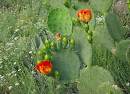
Nopales (prickly pear cactus pads) - for horses?

You want me to eat WHAT? I thought Beet Pulp was the last straw - even though it is now one of my favorite foods - but now you're telling me to hang out in the desert and eat cactus? This nouveau California cuisine may be OK for humans and burros - but I'm an elite equine and expect only the best.

OK, OK - I know I've been eating all the prickly pear cactus I can find all summer and that I look good and my coat is shiny but I thought that was because of the yummy hay you've been finding for us and that nice flax stuff you mix in with our beet pulp. But I have noticed that Choli keeps her girlish figure and wants to play a lot more when she munches on cactus all summer long. We won't tell you our secret, but you've noticed we never seem to have a problem with the "prickly" part, haven't you.

Well, even though we suspected that it might be good for us (the good stuff does seem to also be the yummy stuff) we'll go on just thinking of all that cactus as dessert. So what if it's got lots of vitamins, antioxidants, gooey mucilage (isn't that glue?) and pectin that makes our tummies feel good, plus antiinflammatory action that keeps us limber. And I guess it does help with glucose metabolism 'cause that's Choli's problem, right?


A nutrition summary for Nopales (prickly pear cactus pads) can be seen at NutritionData.com.


The website of Nopal Export (no longer active) outlines some of the "health benefits" of Nopales (as producers, they are admittedly biased).The benefits of primary interest for horses include GI tract protection provided by fiber, mucilage and pectins, lowering of blood lipids and improvement of insulin sensitivity. The pads are low in sugar/starch and high in fiber, which contributes to them being a "safer" forage for insulin resistant horses.

The first time I saw one of mine with a bright
red nose and legs I thought for sure something
awful had happened!
A PubMed search of "prickly pear" brings up 150 results with many looking at the potential for prickly pear (Opuntia ficus indica) to reduce inflammation by inhibition of iNOS (inflammatory nitric oxide synthase) and antioxidant activity, healing of ulcers and lowering of plasma lipid levels. These studies have been done in humans and other species - there have been no studies or actual field trials done in horses that I am aware of.

The nutritional benefits seem to be present in both the pads and the fruit (the "pear"). It is a bit of a shock the first time you see a red mouth (or try to clean those white front socks) when the fruit ripens in early summer but you can relax knowing a little desert "dessert" is possibly good for your horse. My "one rat" study is just an observation that my insulin resistant mare looks and feels better when she is chowing down on summer's abundance of prickly pear.

Links
Wikipedia article on Nopales http://en.wikipedia.org/wiki/Nopal