Wednesday, October 14, 2020

Horse Power!

Pilatus Jet Equine Connection by Hans Erni


Environmentally Conscious New Model Launch - 24 Horse Hitch


You can download high resolution copies at 
https://www.pilatus-aircraft.com/en/image/594cd90990f2e
https://www.pilatus-aircraft.com/en/downloads#pictures/pictures-media-releases


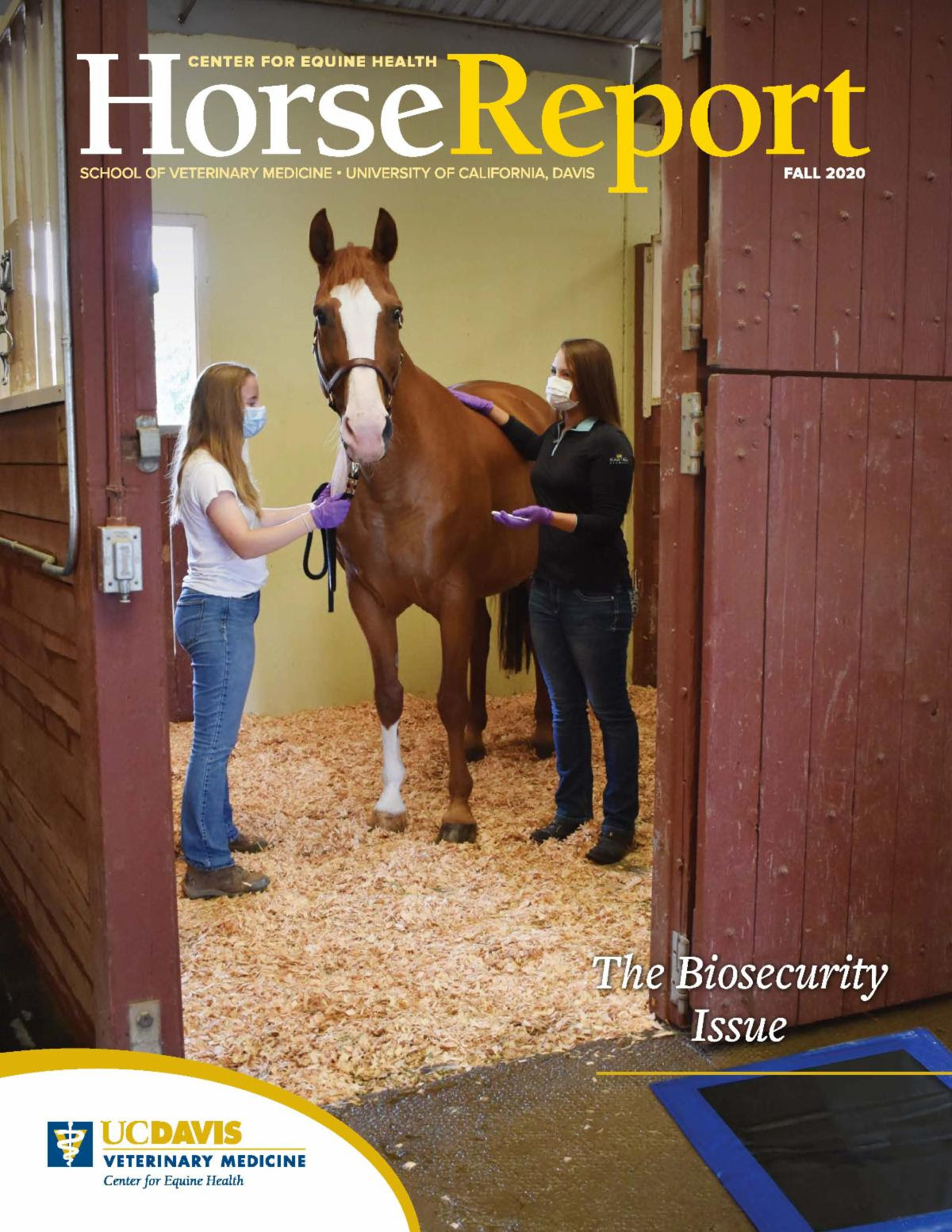
Horse Report Fall 2020


 The fall issue of the UCDavis Horse Report is out.  

This issue is focused on Equine Biosecurity, including:


  • How infectious diseases spread
  • The role of asymptomatic (subclinical) carriers as sources of infectious disease
  • Common equine pathogens to keep on your radar
  • Quick reference guides to keep your horse healthy at home and away from home
  • 10 Things You Might Not Know About Equine Biosecurity
  • And more!

Thursday, November 21, 2019

Don't deck the stalls with these holiday hazards


Bad holiday décor choices by equine owners can truly become a matter of life or death. (It's nothing to horse around with.)


Nov 16, 2016

Pet Poison Helpline

Everyone loves the decorations and lights associated with the holiday season, and most horse people are anxious to share them with their equine friends. Generally this occurs without problems, but to guarantee a safe holiday season a few items should be avoided when decorating barns or sharing food and treats. Peruse these holiday cautions on items that should be used carefully or not at all around horses.


Live greens such as pines and spruce boughs are generally safe when used in wreathes or garlands but should not be wound around stall bars or placed in an area where horses have easy access to them. Chewing on the stems and licking sticky sap may cause irritation to the mouth and gastrointestinal tract, and dried sap in a horse’s mane and tail is difficult and time-consuming to remove.


Yew (Taxus species) is an exception—cuttings in any form from this poisonous shrub should never be used in wreathes, garlands or decorations on stall doors, on fences, or in barns or pastures where horses might have any access at all. The Japanese yew (Taxus cuspidate), a common landscape shrub, is the most widely recognized yew, growing well in almost all parts of the United States, but other yews such as the English yew (Taxus baccata) and Canada yew (Taxus canadensis) are also poisonous. The dark-green needles and attractive fleshy, red fruit make it an ideal candidate for holiday decorations, but the needles and seeds, dried or fresh, are highly toxic to horses, dogs, cats, livestock and people.
Widely referred to as the “tree of death,” yew plants contain several alkaloids that affect cardiac activity. Collectively referred to as “taxines,” the toxins inhibit sodium and calcium exchange in myocardial cells, resulting in abnormal electrical activity and cardiac arrhythmias. The amount of yew necessary to cause toxicosis in horses is very small—estimated to be about 227 g (0.5 lb) for a 454-kg (1,000-lb) horse—and the onset of action is so rapid (generally two to three hours) that most horses are found dead next to yew clippings, wreathes or shrubs. Common signs evident before death include muscle tremors, ataxia, bradycardia, dyspnea and seizures. Sadly, there is no antidote and most horses die even when supportive treatment is provided.


Other plants such as mistletoe (Phoradendrom species) and English holly (Ilex aquifolium) are less toxic but should still be avoided. It is tempting to place a sprig or two of mistletoe over a stall door, but anyone wanting to kiss under the mistletoe should be advised to bring it to barn for the day and take it home with them when they leave. Berries are the most toxic portion of the plant, but all parts contain some amount of toxin. Signs of mistletoe poisoning are very rare but include colic, dyspnea, bradycardia, erratic behavior, muscle tremors and seizures. Mechanical injury from the sharp, pointed leaves of English holly may cause gastrointestinal signs such as hypersalivation, head shaking and lip smacking and ophthalmic irritation or corneal damage


Poinsettia (Euphorbia pulcherrima) plants have an overrated reputation as being toxic but are actually quite safe. They contain diterpenoid euphorbeol esters and steroids with saponin-like properties (detergents). The milky white sap released when the stem is snapped or cut can cause a contact irritation to the skin and eyes, pruritus, and hypersalivation or gastrointestinal upset, but the signs are generally short-acting and self-limiting.


Most artificial or synthetic decorations are safe to use around horses but need to be placed so horses with busy mouths cannot chew or otherwise ingest them.

  • Tinsel and ribbons, if swallowed, may result in esophageal choke, gastrointestinal upset, colic or an intestinal foreign body obstruction.
  • Homemade dough-type ornaments and decorations contain a moderate amount of salt and may be hazardous to smaller horses, ponies and minis that ingest more than one or two larger decorations.
  • Holiday stockings, especially those stuffed with treats and goodies, hung on stall doors, may be easily grabbed by a curious horse that would rather eat the entire stocking contents than enjoy the decoration. While most treats are not harmful, an entire stocking eaten rapidly may result in esophageal choke, colic or a foreign body obstruction. It is far better to hang all the stockings together in single location far away from curious horses with busy mouths.
  • Battery operated ornaments and decorations as well as loose batteries should be in a location inaccessible to horses. Chewing or swallowing a chewed or intact battery may cause irritation and burns in the mouth, an electrochemical burn in the esophagus, or an intestinal foreign body requiring surgical removal.
  • Decorating or dressing up a horse for plays, costume parties or just in good fun is not unusual. Care should be taken that these costumes do not have any loose buttons or objects that may contain lead or other toxic metals. As with all costumes, eyes and noses should not be covered and any body paint used should be listed as nontoxic.


Sweet treats such as chocolate and baked goods are generally harmless in small amounts, so there is no need to worry if a horse, even a miniature horse, eats a chocolate donut or small package of chocolate candies. The amount of theobromine, one of the toxins in chocolate, is harmful in larger amounts, so feeding more than a treat or two is not recommended. Visitors to the barn should be advised that feeding small amounts of any sweet treat, even crunchy carrots, may be hazardous to obese or insulin-resistant horses. Senior horses often have poor dentition and a high potential for esophageal choke, so all holiday treats including apples and carrots need to be broken into smaller pieces for them.
Caffeine-containing beverages are not especially harmful in small amounts, but beware the holiday punch made with ethanol. Horses are as sensitive to ethanol as humans, and spiked holiday punch is best left to adult humans and not fed to horses either as a treat or with malicious intent. Clinical signs of sedation, depression and incoordination occur within 30 to 60 minutes and may last for several hours, depending on the amount and concentration of ethanol ingested.


It goes with out saying that candles and other items that plug into any outlet should not be used anywhere inside the barn. While they are lovely to look at, the risk of fire hazard or electrocution is simply too high. Wiring on lights should be inspected each year before putting them up outside and kept well away from horses and other barn pests that may chew on the cords. Outdoor LED lights are safer and burn cooler, so, if possible, they should replace older holiday lights. Toys and ornaments with cords should be plugged into outlets in areas inaccessible to horses. If left in front of a stall, horses can easily drag it into their stall and start a fire or chew on the cord and electrocute themselves.

The holiday season should be a time filled with fun and festivities. Sharing this with equine friends is a common occurrence in most barns and with a little knowledge, common sense and advanced planning everyone should be safe and sound.
----------------------------------------------------------------------------------------------------
Dr. Hovda is the Director of Veterinary Services at Pet Poison Helpline and SafetyCall International, Bloomington, Minnesota.

About Pet Poison Helpline

Pet Poison Helpline, an animal poison control center based out of Minneapolis, is available 24 hours, seven days a week for pet owners and veterinary professionals that require assistance treating a potentially poisoned pet. The staff provides treatment advice for poisoning cases of all species, including dogs, cats, birds, small mammals, large animals and exotic species. Pet Poison Helpline is available in North America by calling 800-213-6680. Additional information can be found online at www.petpoisonhelpline.com.

As posted in http://veterinaryteam.dvm360.com/dont-deck-stalls-with-these-holiday-hazards?

Sunday, March 17, 2019

To Psyllium or Not - Hay is the Answer!

Like many things for our horses, the basic, simple things in life are often the best. Check out this article by Monique Warren - Sand Colic - The Surprising (Simple) Cure & Prevention for a look into the effectiveness of hay vs psyllium husk in preventing sand colic.
According to studies at the University of Florida, hay is overwhelmingly the most effective way to move sand from the digestive tract and prevent accumulation.
Like salt, clean water and exercise, hay in amounts to provide adequate gut fill is essential for our horses' well being.  When grain or high calorie lower fiber hay is substituted for high fiber forage, especially when "meal fed",  horses become more susceptible to sand impaction and colic.  I recently spoke with a gentleman who has transitioned his high level dressage barn Warmbloods to grass hay, minimal grain and a quality supplement with elimination of long standing hoof problems and improvement in overall health.
It's not always possible to provide a "natural" environment for our equine companions and athletes.  They are stabled for our convenience and asked to work in ways a free roaming horse wouldn't. But they also benefit from advanced veterinary care and explosions in knowledge about horses' basic needs.  Slow feeders - whether hay nets, Monique's Hay Pillows, or one of the many other options now available - can play a part in creating a more natural environment, especially for horses unable to graze because of stabling, travel or metabolic issues.

Other things to consider - standing up for your show horse by refusing to clip their all important whiskers - called vibrissae - sensory organs which help them recognize and sort food and prevent face and eye injuries.
To trim or not to trim your horse’s whiskers? The jury’s out…
Gemma Stanford, the BHS Director of Welfare, told H&H: “The purpose of the horse’s whiskers both around the eyes and muzzle provide sensory feedback on the horse’s environment. The length of the whiskers determines the safe distance from unfamiliar objects or substances and enables them to determine unfamiliar characteristics of food or detect small inedible objects providing an environmental map.*
We can enjoy our horses while helping them be all the horse they can be.

Patti in Vail AZ
hoping that the First Day of Spring actually brings some Spring weather!
*PS - YES! that noseband is way too tight!


Links:
https://www.thehaypillow.com/blog/sand-colic-the-surprising-simple-cure-prevention
https://www.thehaypillow.com
Quality supplements: while hay testing is the ideal, consider AZ Copper Complete or other flax-based supplements from HorseTech
https://horsetech.com/equine-supplements/custom-non-stock-products/arizona-copper-complete
and
California Trace at https://californiatrace.com
Whiskers - https://www.horseandhound.co.uk/features/trimming-horses-whiskers-cruel-633499
Feeding Practices, Equine Dental Health - and Whiskers?
Can Beet Pulp Replace Psyllium to Avoid Sand Build Up?


Thursday, November 30, 2017

Update on The Hardest Decisions

As I was updating and checking links, I found the link to Dr. Garlinghouse's iconic article on Deciding When It's Time, originally posted on Ridecamp,  is no longer active.  I have taken the liberty of posting it here, with the forward from Dr. Eleanor Kellon as posted in the ECIR group.
Because winter is often a difficult time for our senior equine and other furry companions, I chose to post it as a reminder - perhaps mostly to myself - to try to see things clearly before a crisis gives no choice.

page1image960
This was posted by Dr. Garlinghouse on Ridecamp in the summer of 2007 and is reprinted here with permission (with a foreword by Eleanor Kellon, VMD).
The discussion below is an excellent general blue print for how to objectively approach the decision to euthanize. It is geared primarily to animals facing age/chronic conditions. There are also some acute conditions you may face that, while extremely painful to watch, will indeed pass. Hoof abscesses is a good example. These can be painful enough to keep the horse down or 3-legged lame most of the time but once the abscess bursts the pain is rapidly relieved. In addition to the excellent advice below, I'd just like to add that before making the decision make sure you know the cause of the pain, what the usual course of the specific condition is and last, but most important, forget about anything and everything that everyone else is telling you and take a private moment to look deeply into your horse's eyes. You'll know.
Also, if you are not faced with having to make the decision because of an acute worsening of the horse's condition give some thought to a ceremony/celebration on the day of passage. Let all your horse's friends say good-bye. Bring together those close to you so that you can laugh and cry together. Give him a good grooming, a nice walk, a meal of all his favorites and take lots and lots of pictures. This is the part of the cycle of life which we really don't understand and there's no avoiding the pain, but the level of your pain will be in direct proportion to how special your horse is. It's a tribute.
Eleanor

First of all, I agree with [the] comments that sending them on their way a touch too early is preferable to too late; and also that a shorter, comfortable life is preferable to a long, miserable one. That would also be my preference for myself, as well, though it hasn't yet been put to the acid test.
Since I'm a vet, I have to have "the talk" with owners on a regular basis. I also very often hear the comment, "this must be the worst part of your job." And that's not true, because in virtually all cases, I'm doing a profound kindness for the animal, and very often, for the owner as well (though they may not always realize it at the time, if ever). At least a part of why I chose to become a veterinarian instead of a human physician is because I can do for a suffering animal what we won't do for a suffering fellow human being.
So I think one of the first things to consider, when wondering whether it's "time", is that you are in all likelihood making a kind decision on your animal's behalf, at least when the animal is having a significant amount of pain just getting around. Please don't take this that I'm advocating "getting rid of any pet just because it's no longer useful"---I'm not. I have my share of creaky animals that will continue to live out their lives as long as I can keep them comfortable and happy. When I can't, then regardless of the personal pain their loss will cause me, it is my responsibility as their caretaker to relieve them of theirpain, even when that solution entails a humane death.
When I'm talking to clients that are asking whether or not it's time, I suggest that they make a handwritten list---don't just keep a mental tally in your head, because then it's easy to give yourself a selective memory when you want to avoid a difficult decision. Write it down and keep it somewhere safe and easily found. The list should entail all the things you know about that animal that define a quality, enjoyable life for THAT animal---maybe not even at the prime of its life, but as a happy, healthy animal with some good miles left. They can and should include big things like eating with appetite and enjoyment; the ability to move themselves to different areas to eat, drink, relieve themselves, thermoregulate and socialize; and they can be little, individual things like flipping their tail over their back to skip across the pasture, or playing fetch with the stuffed bunny, or wanting to go for an outing of some sort, etc (obviously, things appropriate to the species involved). It should, if appropriate, also balance the need for invasive, uncomfortable medical therapies---a gram of bute a day obviously isn't a big deal, while daily care of deteriorating, painful, non-healing wounds are another.
Just as with anything data-point related, the longer the list, probably the more accurate it will be in defining the animal's life. Then start marking off the things as the animal no longer can or will do them, or only does with great difficulty. And don't cheat. If the animal can only turn around by slowly hopping, or limping so that bystanders wince, or won't move at all when it easily would have a few years earlier, then it's time to cross off "gets around with reasonable comfort".
When you've crossed off half your list, it's not time yet, but definitely time to be paying more attention, and monitoring little extras to make their life easier. When two-thirds to three-quarters of the list is crossed off, it's probably in the not-too-distant future, depending on whether the remaining list-points are big things, or little things. It's pretty individual. IMO, when 80% of the list is crossed off, it's usually time to say thank you, I love you, and goodbye; and if you've crossed off 90% or more off the list, you've waited too long, which is a pretty poor thank you to a good friend.
These are just guidelines, not rules. The concept isn't mine, it was originally put together by some counselors that specialized in pet-loss issues, as well as other veterinarians and a random ethicist or two. I think it works pretty well, and not only helps avoid too-late animal suffering issues (sometimes), as well as hopefully some of the feeling that many owners subconsciously get of "I'm murdering my animal, I'm a bad person", which has been well-documented in multiple studies.
I think the key element in deciding "when" is not based on when is the kindest time for *you*, but when is the kindest time for your animal. It's rare that the two coincide, and if we're to be responsible caretakers for our animals, we have to choose to take on some extra pain for their behalf, so they don't have to for ours.
JMO.
Susan Garlinghouse, DVM 

Thursday, November 23, 2017

Winter Salt - and avoiding dehydration.


A quick reminder - don't skimp on the salt just because it's getting colder.

Even in the Southwest with the crazy weather - record highs in the daytime and cooling down at night, many horses are less inclined to drink enough water.  In most areas, horses are transitioning from pasture to hay for the winter with it's much lower moisture levels - and even when pasture is still available the moisture content is usually much lower than spring and summer grass.  This transition is a critical time for impaction colic as total water intake is reduced. For older horses this is compounded by the lower levels of saliva they produce even in optimal conditions.

Can we prevent impaction colic related to low water intake?

Adding salt to your horse's feed will help trigger thirst and increased drinking.  If you haven't already made a habit of adding a Tablespoon of salt to the feed, it may take some time for your horse to get used to the taste - start small with just a sprinkle and work up to an ounce a day for the average horse. Don't rely on salt blocks - horses generally can't get adequate amounts from them - but a plain white block should be available as a backup.  If you see the block being worn down from use, that's an indicator you probably should be adding more salt to the feed.  Loose salt is a good option but you need to protect it from rain and monitor intake.

It's also important to monitor water intake. I prefer to not use automatic waterers so I can quickly judge how much water my horses are drinking. For an average size horse we want to see them drinking at least five gallons a day, and preferably closer to 8-10 gallons when on dry hay and feed.
Automatic waterers need to be checked frequently - and an alternativee water source supplied if there is a chance they might freeze.

If you do have automatic waterers, learn how to check you horses hydration by doing a skin pinch on the neck - it should "snap back" within a second or two - and press your thumb on the gums to check capillary refill - the spot you pressed should pink up again within 2-3 seconds.  A horse becoming dehydrated will appear "gaunt" - even if they have good body condition - a telltale spot to check is the flank right in front of the hip.  Another sign is "sticky" mucous membranes and manure that appears dry.

Whether your use tanks, buckets, automatic waterers or a combination, consider the reliability of your water source.  Could a storm cause power outages which will keep your well from functioning or cause the water company's pumps to fail?  Think ahead and prefill extra tanks and buckets if they might be needed.

In warmer parts of the country, we're usually not as well prepared for freezes and may need to resort to bringing warm water from the house if there is a hard freeze.  Lining buckets or trash containers with clean garbage bags then closing the tops will let you transport full buckets without half of it splashing out.

If you suspect your horse is becoming dehydrated, try to provide as much wet feed as possible - soupy beet pulp or hay pellet mashes, well soaked hay.  Even if the hay freezes, as long as the horse eats it they'll get the benefit of the moisture.

I'm saddened every time I hear of a horse with a winter impaction which might have been avoided by monitoring water intake and the most important supplement of all - plain white salt!

Patti in (crazy record high hot) Vail AZ

Saturday, September 30, 2017

2017 NO Laminitis! October 27-28-29


This amazing sculpture by artist Lauri Slenning is installed on the Houghton Road median just south of 22nd street as part of the Houghton Corridor improvement.  Depending on the time of day, the lighting and the angle of approach the Mare and Foal seem to disappear. In other lighting their realism is startling. See the artist's website for other views http://www.slenningsculpture.com

Looking forward to seeing you all at 2017 NO Laminitis! in a few weeks! The informal "meet and greet" with be at the Hilton Thursday evening before the conference.

Welcome to warm, sunny Tucson Arizona - don't forget your bathing suit!

Patti

Sunday, June 04, 2017

Nifty Conversion Calculator


Confused about how many milligrams of copper or grams of calcium, etc. are in your horse's feed or supplement? I know some days my brain is simply too tired to do the math.

But the Triple Crown Feed website has an easy to use conversion calculator -  simply plug in the amount shown on the label, select the "units" (ppm, %, etc.) shown and the calculator will show the results.

For example - if the label on your feed bag reads "Copper 65 ppm", the calculator will show that there are 25.9 mg in each pound of feed and you will likely need to feed 3-1/2 to 4 lbs a day to meet the average horse's minimum copper requirement (of 95+ mg).


$$$ In, $$$ Out - make your $$$ count!


If this were a "supplement" which you'd usualy feed in ounces,  at 1.8 mg/oz you'd see that it doesn't come anywhere near supplying sufficient copper without feeding some huge amount.

Don't shop for feed or supplements blindly - you can use the calculator to see if your horse is really going to get what he needs.  And don't get taken in by the "BIG" bucket - checking with the conversion calculator can help you decide if it's truely a bargain or if you're paying good money for a lot of filler.

Happy Summer!
Patti in (very warm) Vail AZ

https://www.triplecrownfeed.com/compare/triple-crown-unit-conversion-tool/


Saturday, December 19, 2015

You've Been Asking For This -


So I finally sat down and reviewed, updated and revised my original Hay Analysis Mineral Balancing Paper/Pencil Worksheet.  I haven't done a major revision on this in several years and several users who prefer the paper/pencil and calculator method to using my spreadsheets have been asking me where to find it.

In addition, I have also made up a "simplified" version with a bit less detail which can help walk you through a quick look at what your need with your hay - based on your hay analysis results, of course. This can also be used as a quick manual check against a spreadsheet if you do use those.  There is a Basic Example Worksheet already filled out to give you an idea, and a Basic Blank Worksheet to download and print.

Both versions will take you step by step through the math and I purposefully did not use any "shortcuts" which tend to snag the unwary or math challenged.  If you simply plod through each step you should come up with correct results.

I'd like you to keep in mind that these worksheets are simply a device or tool to help you plow through the math, these are not recommendations or guidelines for supplementing your horse's diet.  If you're not familiar with or comfortable with the Nutritional Requirements of Horses, seek assistance from an independent equine nutrition consultant, your veterinarian or other equine professional familiar with your horse's nutritional needs.

To help get you started, a basic table of NRC Nutrient Requirements (from the 1989 edition) is available on the Equi-Analytical website.  http://equi-analytical.com/nutrient-requirement-tables/

I'd like to thank everyone who has stuck with me through what turned into a very stressful year filled with a multitude of unanticipated medical issues but which brings me to this holiday realizing I am blessed in my friends, my family, my horses and my life.

(And did I mention the pdf worksheet downloads are free?)


Happy Holidays and Warm Regards,

Patti in balmy Vail, AZ
whose going to go to the barn and hug a horse!


Links:
Mineral Balancing Worksheets on Google Drive

How to Access the Equine Nutrition Balancing Spreadsheets

Basic table of NRC Nutrient Requirements


Thursday, December 17, 2015

The Itchies Are Coming!... Whoa - it's not even Winter yet!

Now is the time to be thinking about warding off the spring/summer "itchies" which seem to plague many horses beginning with spring shedding and progressively getting worse as summer's bugs and sweat become part of daily life with your horses.

"It's winter and cold out, it's not a problem now!" I can hear many of us thinking. But this is exactly the time to start thinking about the basic causes of the inflammation process that triggers many forms of "the itches" and to begin your intervention tactics.  A multi-pronged approach I first learned from Dr. Eleanor Kellon, VMD, well known  leader and innovator in equine nutrition, has worked well for clients horses in the Southwest and across the country.

The basis of "itch", a sensation that causes the desire or reflex to scratch, arises from inflammation of nerves. Once sensitized, it becomes easier and easier for the nerves to become "excited" and more and more difficult to quell the sensation.  The sensitivity may carry over from the original culprit (an insect bite or contact with a noxious plant or substance) so that almost anything becomes a "trigger" - something which will set off the need to scratch.  Along with this comes a whole catalog of false-positive "allergies", even to substances the horse has never been exposed to before. A "true" allergy requires previous exposure to an allergy causing substance and the development of antibodies to the allergen itself, while a "false" allergy is an inflammatory reaction to a trigger acting as an irritant to the immune system.

Why some horses respond or react more to inflammatory insults than others isn't really known - just as why some people are allergic to bee stings or have autoimmune diseases and others do not.  There may have been a reaction to midge bites or another "trigger" when their immune system was busy with something else and that began the process. What we need to accomplish is to support the immune system so it can effectively deal with future triggers.  At the same time we don't want to "stimulate" the immune system as it is already overstimulated.

The first step in a comprehensive plan to combat next season's itchies is mineral balancing your horse's diet.  Without the base diet in place to provide the body with the tools and building blocks to develop and maintain a strong immune system, all your subsequent interventions become an exercise in futility and a waste of your time and money.  Start with a calcium phosphorus ratio as close as 2:1 as you can bring it, add magnesium to bring it to a similar level to phosphorus, then identify and balance excessive levels of iron (pro-inflammatory) and manganese.

The next step in your comprehensive plan is to provide a source of Omega-3 fatty acids and vitamin E in your horse's diet year round.  When horses graze active gowing pasture they receive adequate Omega-3 but, as soon as hay is cut and cured this is lost almost immediately (along with vitamin E). Flaxseed (fresh ground or stabilized) at a rate of two to six ounces a day, flaxseed oil at one to four ounces per day, chia seed at two to six ounces per day or any of a number of commercial Omega-3 supplements can provide the powerful antioxidant support missing from hay.  Vitamin E is another antioxidant which is easy to include (at a rate of 2 IU per pound of body weight or 2,000 IU for an average horse).

By starting these steps now when your horses may least seem to need them you're ensuring they enter into the critical spring shedding season with good immune system reserves.

Spirulina
Thinking ahead to your horse's spring and summer response to their usual triggers - bug bites, sweat, etc. - be prepared to take action before these triggers can set off a full scale inflammatory response. If your horse always breaks out in hives at the first sign of a gnat or midge, begin giving Spirulina at a rate of 20 grams twice a day (or 40 grams once a day) about a month before the first bug is expected to appear.  Spirulina is a farmed source of a specific blue-green algae (not "any" blue-green algae will do). Despite some of the outrageous claims of Spirulina as a "super food", it does have some mast cell inhibition properties and suppression of histamine levels which can effectively slow down or even halt some inflammatory responses, (similar in effect to the human medication montelukast).

A "nutraceutical" which has an anti-inflammatory effect is chondroitin sulfate.  This is the "same" chondroitin popular as a joint supplement but given at a rate of 2.5 to 5 grams per 500 pounds body weight per day, or 5 to 10 grams per day for an average horse.

There are several other herbs and "natural" remedies which may be helpful but few will be effective once the inflammatory cascade has been set in motion.  If you wait until your horse is already reacting to sweat and bug bites with hives or scratching themselves raw, you'll most likely need veterinary intervention and medications incluiding steroids and anti-histamines to slow down and halt the process and you - and your horse - will be stuck with another year of the misery of the itchies.

Caution! Just because sometihing is "natural" does not mean it is safe!  Make sure your veterinarian is aware of any supplements, herbs and nutraceuticals you give your horse, especially if any medications or treatments are also needed.  Even "natural" topical medications and sprays can be triggers - for example, a "natural" fly spray triggered my asthma last summer and raised hives on one horse's rump.

Plan ahead - and think about next summer's worst being a good roll in the sand and a shake after a ride. (This would be a great time to take Dr. Kellon's NRC Plus and Nutrition as Therapy courses!)

Warm regards,

Patti
in very chilly Vail Az


Links:
I have included Wikipedia and commercial links here today because they provide some simple explanation.
https://en.wikipedia.org/wiki/Itch
https://en.wikipedia.org/wiki/Allergy
http://www.desertequinebalance.com/articles/allergic-skin-reactions
http://www.desertequinebalance.com/supplements/omega-3
http://www.desertequinebalance.com/supplements/vitamin-e
http://www.drkellon.com
http://www.drkellon.com/coursedescriptions/nutritionasatherapy.html
http://www.mybesthorse.com/productinformation/spirulina.html
http://horsetech.com/equine-supplements/basic-ingredients/spirulina
http://www.ncbi.nlm.nih.gov/pmc/articles/PMC1781653/pdf/12061428.pdf
http://www.lifeextension.com/protocols/immune-connective-joint/allergies/page-03
http://www.mybesthorse.com/productinformation/chondroitinsulfate.html

Wednesday, December 09, 2015

Warm Days, Chilly Nights and a Cold Snap Moving In - Salt is for Winter, Too!

Just another reminder that these conditions in the Southwest can set up your horse to easily become dehydrated which can lead to an impaction.

Your first line of defense? SALT!  An adult horse needs about an ounce of plain white salt a day added to feed for maintenance - about four teaspoons or a small handful. This will ensure an adequate "thirst response" as long as fresh clean water is available.  Most horses can't get enough salt solely from a block, although a plain white block or brick should always be kept available in their feeder and/or turn out area.

Next in our line of defense is monitoring water intake. My horses consistently are drinking ten to twelve gallons each now that the weather has cooled down, and a little more when daytime highs go up into the 80's (I just love living in Arizona!)  I long ago got rid of my automatic waterers and switched to large muck buckets for water, along with a 100 gallon tank in the turn out area. If you use automatic waterers, they need to be checked every day to ensure they are working properly and not freezing up during the night; providing a bucket of water also is good insurance but not always possible if you board. You should also do a hydration check on your horse daily - squeeze a fold of skin between your index finger and thumb, it should snap back flat in less than three seconds, and check that the gums are moist, not dry or sticky.

As horses age they make less saliva when they chew; this can be aggravated if water intake is inadequate. Combined with worn or missing teeth hay can become difficult to chew into digestible lengths which will pass easily through the digestive system leading up to an impaction.

Consider using a leaf mulcher to chop hay into finer lengths and/or wetting the hay down.  Getting the older horse used to accepting concentrates as a mash, with wetter and soupier consistency as it's accepted, is a good way to get more water into these older campaigners.  Hay pellets and beet pulp shreds will hold many times their weight in water and the fineness of the grind makes them a good option.

Caution with beet pulp pellets - unless they're soaked for several hours, beet pulp pellets can retain a hard center which may cause a problem for some horses.  I've been finding much more consistency in the beet pulp shreds I purchase now (cleaner, more consistent chop) than when I first started feeding beet pulp fifeen years ago, plus they soak up water quickly, eliminating the need for a long soak.

Feeding the mash in a large muck bucket will also encourage whoever is doing the feeding to add more water than if the feed is mixed up in a small bucket. I mix the beet pulp shreds, Timothy hay pellets, supplement (AZ Copper Complete), salt and any other add-ins in easy to carry buckets out to the stalls, then dump it into the large muck buckets and soak it all with a hard spray setting with a hose to thoroughly mix, using at least a gallon of water per horse.   The muck buckets are easy to keep clean and don't tip easily - at least not until they're down to licking up every last drop!


Bottom line - plain white salt is likely the most essential supplement you can provide to your horse - along with lots of clean, fresh water and quality forage.

Stay warm and enjoy your horses!

Patti
in warm sunny Vail AZ - until the weekend (Brrrrrr)

Links:
AZ Copper Complete - http://horsetech.com/arizona-copper-complete
Leaf Mulchers - http://www.bestreviews.guide/leaf-mulchers?
Large muck buckets -http://www.tractorsupply.com/tsc/search/muck%20bucket


Tuesday, November 24, 2015

Feed Naturally to Prevent Winter Colic - and Don't Forget the Salt!

Prevent Seasonal Colic and Ulcers Holistically by Joyce Harman, DVM from HolisticHorse.com
Not something we want to see in our barn!
“It’s no secret that horses have a finicky digestive system. By design, they should move and graze for up to 20 hours a day. This natural behavior keeps the hindgut full, which leads to a properly functioning digestive tract. Most horse owners aren’t able to provide this optimum environment and alter the horse’s patterns to fit into their lifestyles. At times, that means stalling horses or keeping them in small paddocks, while feeding them large amounts of processed feed. Whether we realize it or not, altering the natural behavior puts stress on the horse’s body.”


Dehydration is often a primary cause of winter impaction colic. As the weather cools down, our horses may need to be encouraged to continue drinking adequate water - this is best done by adding salt daily to their feed. Most horses won’t get the one to two ounces (four to eight teaspoons) of salt they need to provide their sodiumrequirement (it's the sodium which triggers a thirst response) from a block. If your horses aren’t used to having salt added to their feed, you can start by “salting the environment” - literally sprinkling salt around their stall, on their hay, etc. the help them get used to the smell and taste.  Then gradually add up to at least one ounce per day for an average 900-1100 pound horse. If you provide free choice salt, make sure you monitor their intake.

It’s also important to monitor your horses’ water intake during the winter which can be difficult if you use automatic waterers - especially as they can be subject to freezing.

Old Camping Trick:  In my part of Arizona, we generally have only ten nights or less of hard freeze. I’ve found the easiest way to get fresh warm water to my horses on these days is to place a clean trash bag in muck buckets, fill them at the house then tie off the top of the bags.  I can then drive them to the barn in my truck or in a cart without sloshing or losing a drop. 

Warm regards from
Patti in sunny Vail AZ
 - where Fall has finally arrived

Links:
Winter Water Needs for Our Horses
Introducing New Feeds (or “salting the environment”)
Prevent Seasonal Colic and Ulcers Holistically

Sunday, November 22, 2015

Updating Vitamin E

This has been a busy and challenging summer for me and it's good to finally be back on line - though it will still be some time before I expect to be back in the saddle.

I'd like to invite you to check out some recent updates to my Vitamin E article, “Comparing the cost of providing Vitamin E for our horses” at my website. Thanks to Rob Stuart, Ph.D., President of Stuart Products, Inc. (supplier of EMCELLE TOCOPHEROL micellized alpha-tocopherol) for pointing out some changes which were needed.

If your horses' primary diet consists of cured hay during the winter, they should receive supplemental vitamin E.  Current NRC daily recommendations for vitamin E in horses are 1 -2 IU/kg body weight (250-500 IU)which is easily supplied by active pasture but is quickly lost when hay is cut and cured. This is a “minimum” level and may not be adequate for horses with neuromuscular disorders, pregnant or lactating mares and metabolically challenged horses. Vitamin E, although a fat-soluble vitamin, is not stored in the body as vitamins A and D are, so should be supplemented daily when not supplied by the diet.

Dr. Eleanor Kellon has suggested a minimum of 2 IU vitamin E per pound of body weight (or 2,000IU/day for an “average” horse)on a cured hay diet to ensure they receive adequate levels.

I hope you find the updated article interesting and helpful in selecting the most cost-effective vitamin E supplementation for your particular circumstance.

Best regards,

Patti
in sunny Vail, AZ

Links:

Vitamin E: Comparing the cost of providing Vitamin E for our horses
http://www.desertequinebalance.com/supplements/vitamin-e

University of Minnesota Equine Center, Neuromuscular Diagnostic Laboratory : Selecting a Vitamin E Supplement
http://www.cvm.umn.edu/umec/lab/vitE/home.html

NRC Plus - Eleanor Kellon, VMD’s introductory equine nutrition on-line course
http://www.drkellon.com/coursedescriptions/nrcplus.html

ECIR: Treatment of Insulin Resistance
http://ecirhorse.org/index.php/insulin-resistance/treatment-of-insulin-resistance


Friday, September 04, 2015

Figuring Out What Works - and What Doesn't

I frequently enjoy reading David Ramey, DVM's interesting articles on his website and the variety of 
 comments they evoke at his Facebook page. While I identify with Dr. Ramey's common sense approach and his feelings about the many costly yet ineffective treatments and interventions marketed to horse owners, I often can't agree with his blanket approach of throwing out any intervention which isn't totally based on published scientific study.
Equine research is expensive - ask any horse owner how quickly we can go through a huge portion of our income - and unless there is opportunity for a substantial financial return there is little incentive to run original research studies or seek FDA approval.
Unfortunately, this has led to many purveyors of products targeted to horse owners making unsubstantiated claims of effectiveness based on myth, inappropriate use of studies in other species with little or no bearing on equine health and inflation of prices on anything labeled for "equine".
Midas turns his daughter into gold
I once saw a claim by a mineral supplement manufacturer that the sodium (salt) in the supplement would be changed in the gut to potassium.  In alchemy, this is known as transmutation - and has also been known as the "Midas touch".  I would be very hesitant to purchase a supplement from a source which doesn't understand basic chemistry or digestion.
Another (well known and "trusted") manufacturer lists all the intrinsic elements of the base ingredient (flax) in their supplement. This grossly inflates the length of the "analysis" listing, even though these individual substances appear in insignificant amounts.  This makes it easier to justify their high cost and may falsely lead someone to believe they're actually providing all their horse needs. (I use HorseTech for all my custom supplement needs - they list "flax" as simply "flax", not a compendium of 18 or more substances that are intrinsic to flax and not added by them.)
Cross-species extrapolation can be a valuable research tool but needs to be validated in the target species, not just assumed that what is good for one is good for another.  Look at Xylitol - an artificial sweetener which can help reduce cavities in humans but can be a life-threatening toxin to dogs.
One way to validate is by extensive field trial, which has been successful in helping to establish the protocols used by the ECIR Group with Insulin Resistant and Cushing's horses.
Horse owners can objectively validate the usefulness and success of a supplement, feed, medical treatment or alternative intervention by tracking clinical signs, along with taking quality photographs and videos.  Some time ago I developed a simple Clinical Signs Tracker which you can use to observe and track changes in your horse.
You should be specific in defining what you're trying to fix (which requires a proper and specific diagnosis), tin understanding how the intervention (supplement, medicine, treatment, etc.) is supposed to address the issue and how quickly the intervention is expected to resolve or improve the issue. For example, an intervention for ulcers (medical treatment, stress management, changing feeding management) should take your horse from a "3" to an "7" or "8"on the Attitude scale fairly quickly - often within a week, while adjusting the diet for improved hoof quality can take upwards of three months to see significant results and a full hoof growth cycle or more to completely resolve hoof problems.
This won't work if you're looking for a magic bullet but can be very useful in determing if the medication or laser treatment or expensive supplement actually made a difference or just lined someone's pocket. Depending on the intervention, you might track and photograph only on a weekly basis, while for something like wound healing, daily photos - at least initially - might be helpful.
The best reward? Someone asking "When did you get a new horse?" and having the documentation and photos to show your hard work paid off.

With best regards,

Patti
in warm, wet, cloudy Vail AZ

Links
http://www.doctorramey.com/if-you-see-results-what-else-is-there-to-say/
https://www.facebook.com/DRRameyDVM
‪https://www.dropbox.com/.../Clinical%20Signs%20Tracker...‬
http://ecirhorse.org
http://www.horsetech.com


Wednesday, February 25, 2015

Feeding Practices, Equine Dental Health - and Whiskers?

In the past twenty years I have only had one horse I've raised require dental floating. I have had rescues and "rehome" horses needing work but, when my vet or dental professional has checked my horses it's always been "They're fine, we'll check again next visit".
I was reminded of this seeing the recent article from Kentucky Equine Research (KER) - Feeding Practices May Impact Horse Dental Health which explains how many modern diets and horse keeping practices can affect our horses' teeth.
I'm fortunate in Arizona to not have the lush green pasture often prized by many horse owners. As some owners with "easy keeper" horses discover, this beautiful pasture can be far from ideal for their horses' health and they find themselves ripping out grass to make "Paddock Paradise" tracks and dry lots.
My Arizona "Pasture"
My horses get to "graze" on mesquite, chaparral, prickly pear cactus and other desert bounty in addition to their main diet of ground-fed Bermuda hay with Timothy pellets added for variety.  When it's windy I place their hay in nets at a fairly low level and with extreme weather, they eat directly from floor mats in the barn. They've gotten quite good at ferreting out the stray clump of grass that shows up during rainy season and don't seem to have problems with the annual mesquite bean crop - likely because they ease into them as they ripen with daily access so don't gorge like a horse with limited turnout might.

Along with good dental health, I haven't had sand issues from ground feeding, either.  I attribute this to always having hay available so their gut is never empty, feeding a substantial amount of (molasses-free) beet pulp daily with their supplements which supplies some pectin and mucilage, and never clipping muzzle hair.  I don't advocate direct ground feeding for show horses which may be clipped as they are lacking vibrissae - the essential, extremely sensitive whiskers which allow the horse to feel tiny differences - such as separating a flake of food from a grain of sand.  Because of the importance of the facial vibrissae to the horse, including for protection from eye trauma, trimming equine facial whiskers has been outlawed in Germany. See the fascinating discussion of sensory perception in the horse at the link below.

Warm regards,
Patti in Sunny, Warm Vail AZ

LINKS:

KER article: Feeding Practices May Impact Horse Dental Health
http://ker.equinews.com/article/feeding-practices-may-impact-horse-dental-health

Vibrissae - general in mammals: http://en.wikipedia.org/wiki/Whiskers

Vibrissae - importance to perception in the horse http://www.us.elsevierhealth.com/media/us/samplechapters/9780702026348/9780702026348.pdf